With New Horizons Ready to Wake Up, Scientists Prepare for Pluto Encounter
Somewhere deep within the suburbs of our solar system, the New Horizons spacecraft is sleeping. It’s been that way since late August, when it cruised past Neptune’s orbit, yawned, and entered hibernation five days later. It was the 18th and final time the spacecraft went to sleep—all part of a routine crafted to conserve the load on NASA’s pricey Deep Space Network satellite dishes.
http://www.planetary.org/blogs/jason-davis/20141114-new-horizons-wakeup.html
Related
Recent Posts Hacks all the time. Engineers recently found Yahoo systems remained compromised
U.S. WC-135 nuclear sniffer airplane has left the UK heading towards Norway and the Barents Sea

The Long Journey to Pluto: A Decade of Patience
New Horizons launched on January 19, 2006, from Cape Canaveral aboard an Atlas V rocket, setting a record for the fastest spacecraft ever launched. It crossed the Moon's orbit in just nine hours and reached Jupiter in 13 months, using the giant planet's gravity to slingshot itself toward Pluto, gaining an additional 9,000 miles per hour. That flyby in February 2007 also provided a critical test of the spacecraft's instruments, capturing stunning images of Jupiter's turbulent atmosphere and its moons, and confirming that New Horizons was ready for its primary target.
Since then, the spacecraft has been coasting through the cold, dark outer solar system, traveling over three billion miles. For most of that time, it has been in a state of hibernation to conserve power and reduce wear on its systems. The hibernation mode, which shuts down most of the spacecraft's electronics except for a few essential heaters and a weekly beacon signal, has been carefully managed by mission controllers at the Johns Hopkins University Applied Physics Laboratory. Each hibernation period lasts several months, punctuated by brief wake-ups for system checks and occasional course corrections.
The rationale for this sleep-wake cycle is simple: flying a spacecraft for nearly a decade requires minimizing the use of the Deep Space Network, NASA's global array of giant radio dishes that communicate with distant probes. Every minute of antenna time is precious and shared among many missions, so New Horizons only phones home when necessary. Moreover, running instruments continuously would generate heat and consume power that the spacecraft's radioisotope thermoelectric generator must carefully ration. Hibernation also protects sensitive electronics from the harsh radiation environment of deep space, extending the mission's lifetime.
Yet even in sleep, New Horizons is not idle. Its onboard computer maintains a steady course, and its thermoelectric generator keeps critical systems warm. The spacecraft remains in contact with Earth via a once-a-week beacon tone that tells controllers all is well. As the distance grows, that signal takes more than four hours to reach Earth, traveling at the speed of light. This time delay will become a defining challenge during the Pluto encounter, when real-time control is impossible and the spacecraft must execute its observations autonomously.

The Wake-Up Call: Final Approach to an Icy World
On December 6, 2014, mission operators sent a command to New Horizons to exit hibernation for the final time. The signal, traveling at light speed, took four hours and 26 minutes to cross the 2.9 billion miles between Earth and the spacecraft. Upon receipt, the spacecraft began warming its instruments, powering up its guidance systems, and transmitting a confirmation signal back to Earth. That confirmation arrived at 9:53 p.m. EST, prompting cheers in the mission control room. The long sleep was over; the active encounter had begun.
The wake-up marks the start of a six-month approach phase leading to the closest approach on July 14, 2015. During this period, the mission team will conduct a rigorous series of checkouts, calibrations, and trajectory adjustments. The spacecraft's seven science instruments—which include cameras, spectrometers, and particle detectors—will be tested and primed for the intense observation sequence. Controllers will also refine the spacecraft's path using optical navigation, comparing images of Pluto against background stars to ensure the flyby geometry is perfect.
Even at wake-up, Pluto is still a faint dot in New Horizons' cameras, but that will change rapidly. By January 2015, the spacecraft will begin daily imaging to monitor Pluto's rotation and search for any undiscovered moons or debris that could pose a hazard. By May, the resolution will surpass that of the Hubble Space Telescope, and the science team will start making real discoveries. The final weeks will be a whirlwind of activity: mapping surface features, analyzing atmospheric composition, and studying Pluto's five known moons—Charon, Nix, Hydra, Kerberos, and Styx.
The flyby itself will be a tightly choreographed dance. On July 14, New Horizons will zip past Pluto at a distance of just 7,800 miles (12,500 kilometers) at a speed of 31,000 miles per hour (14 kilometers per second). During the closest approach, the spacecraft will be too busy collecting data to communicate with Earth. It will store everything on solid-state recorders and then, in the days following, slowly transmit the data back to Earth—a process that will take 16 months to complete due to the limited data rate from such a vast distance.
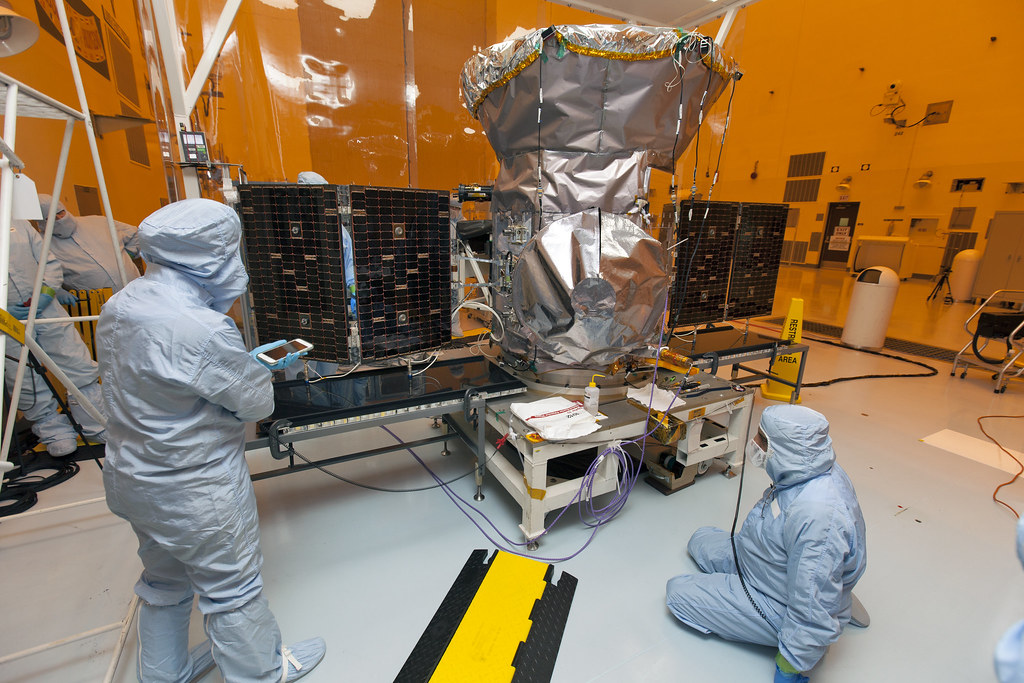
Unlocking the Mysteries of an Icy Dwarf Planet
Pluto has remained a largely enigmatic world since its discovery by Clyde Tombaugh in 1930. Even through the Hubble Space Telescope, it appears as little more than a blurry sphere with faint surface markings. Yet scientists have inferred a surprisingly complex object: a world with a tenuous nitrogen atmosphere, seasons driven by its highly elliptical orbit, and a surface marked by bright and dark regions that suggest geological activity. New Horizons will transform this fuzzy picture into a detailed map, answering questions that have lingered for decades.
The spacecraft's instrument suite is tailored for a comprehensive survey. The Long Range Reconnaissance Imager (LORRI) will capture high-resolution images, revealing features as small as a football field. The Ralph instrument combines a color camera and an infrared spectrometer to map the composition of Pluto's surface, identifying ices of nitrogen, methane, and carbon monoxide. The Alice ultraviolet spectrometer will probe the atmosphere, determining its structure, temperature, and escape rate. Meanwhile, the Radio Science Experiment (REX) will measure Pluto's mass and atmospheric pressure by analyzing radio signals passing through the atmosphere.
One of the most anticipated discoveries is the nature of Pluto's geology. Does it have cryovolcanoes that erupt water-ammonia ice? Are there tectonic features caused by internal heating? How does the surface interact with the atmosphere, which freezes and sublimates as Pluto moves through its 248-year orbit? Scientists also hope to understand the Pluto-Charon system, a binary world where two bodies orbit a common center of mass outside either body. Charon, half Pluto's size, likely shares a common origin and may exchange material.
Beyond Pluto itself, New Horizons will study the smaller moons, which are thought to be remnants of a giant impact that created the system. Their chaotic rotations and unexpected brightness variations have already puzzled astronomers. The flyby will also provide a unique opportunity to study the Kuiper Belt, a region of icy bodies left over from the solar system's formation. Pluto is the largest known member of this belt, and its study will shed light on the building blocks of planets.
Beyond Pluto: The Kuiper Belt and Interstellar Ambitions
After the Pluto encounter, New Horizons will continue its journey outward, venturing deeper into the Kuiper Belt. The mission team has already identified a potential next target: a small Kuiper Belt object designated 2014 MU69, located about a billion miles beyond Pluto. If NASA approves an extended mission, the spacecraft will perform a flyby of this primitive object in January 2019. This would provide an unprecedented look at a building block of the solar system that has remained untouched for 4.6 billion years.
The Kuiper Belt is a vast repository of icy bodies, including dwarf planets like Eris, Makemake, and Haumea. These objects hold clues to the early solar system's dynamics and the migration of the giant planets. Studying them helps us understand how our planetary system formed and evolved. Moreover, the techniques and technologies developed for New Horizons will pave the way for future missions to even more distant targets, including the proposed exploration of ice dwarfs and the interstellar medium. As we look beyond our solar system, we draw inspiration from concepts like Interstellar Expansion: Colonizing Ice Dwarfs and Resources Between the Stars, which imagine a future where humanity reaches beyond Pluto.
New Horizons is more than a scientific mission; it is a testament to human curiosity and engineering prowess. When the spacecraft wakes up for the final time, it carries with it the hopes of a generation of scientists and space enthusiasts. The images and data it returns will not only rewrite textbooks but also inspire new questions and missions. As we stand on the threshold of the Pluto encounter, we are reminded of the bold vision behind projects like the New Exoplanet-Hunting Mission To Launch In 2017 and the 100 Year Starship: Crossing the Disciplines, which push the boundaries of exploration further and further.
In the end, the Pluto flyby is not just about a distant world; it is about our place in the cosmos. It is a reminder that even in the cold, dark reaches of the solar system, there is wonder to be found. And as New Horizons sends back its treasure trove of data, we will be looking back at a small, frozen world that has captured our imagination for nearly a century.