Looking Back from Deep Space
It’s reasonable to call the two Voyager spacecraft our first interstellar probes, in the sense that they are approaching the heliopause and are still transmitting data. Long before controllers shut them down — which should occur somewhere in the 2020s — Voyager 1 will have left the Solar System and we’ll have data on what happens when the solar wind gives way to the stellar winds from beyond. A case could be made for the Pioneer craft as interstellar probes as well, but while Pioneer 10 has reached a distance of 107 AU, the Pioneers are no longer transmitting data. Voyager 1 is now 123.45 AU out, for a round-trip light time of 34 hours, 15 minutes.
But does leaving the Solar System mean we’ve truly entered interstellar space? An entertaining piece called Postcards from the edge, published in early February by The Economist, notes that much depends on how we define ‘interstellar.’ Gravity, says its author, defines the universe at the largest scales, and if we’re talking about gravity, Voyager is still deeply in the grip of the Sun. In fact, Voyager 1 would have to travel another 14,000 years to reach the roughly 50,000 AU distance where the Sun’s gravity would cease to be a factor.
Image: Voyager 1’s cameras were turned back on in early 1990 to take pictures of our Solar System. The spacecraft took some 60 pictures of the Sun and 6 of the planets; the 60 frames were combined to make the mosaic seen above. The six individual shots were taken when Voyager 1 was more than 4 billion miles from Earth. Earth appears framed in brightness due to the amount of light scattered while taking the picture with Earth so close to the Sun. Credit: NASA/Caltech.
Over the weekend I’ve enjoyed playing around with deep space scenarios and thinking about what the sky might look like from Voyager 1. When I was growing up, some accounts I read of the outer Solar System implied that the Sun would be nothing more than another star from a place like Pluto. That turns out to be incorrect, as Phil Plait pointed out in a 2012 post. Working with Pluto’s average distance from the Sun — 39 AU — Plait found that the Sun would still be 250 times brighter on Pluto than the full Moon appears on Earth. Factor in the eccentricity of Pluto’s orbit and the actual numbers move from 150 to 450 times as bright as the full Moon.
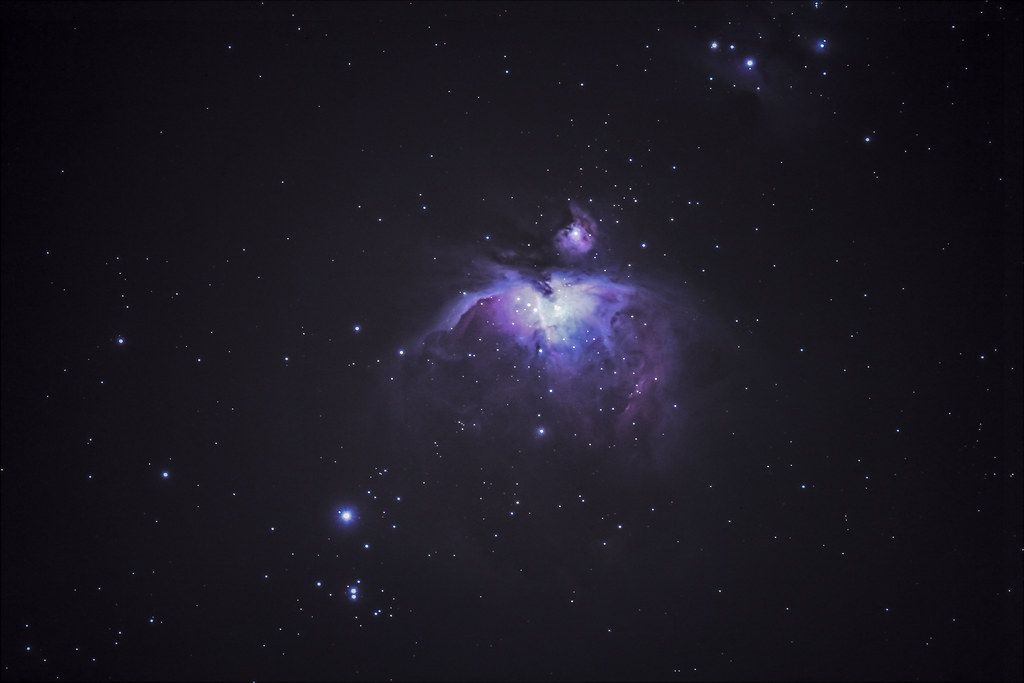
So let’s ask this: How far would our Voyagers have to be from the Earth before the Sun began to look like just another star? It turns out we’d have to go a long way. From 400 AU, a distance at which we’re definitely in the local interstellar medium, the Sun still shows an apparent magnitude of -13.7, which makes it the brightest star in the sky (Sirius comes in at -1.46). This information comes from Mike Gruntman (USC), who worked it out in a paper studying what kind of instrumentation we’d like to have aboard a probe expressly designed for interstellar space.
The Sun obviously still dominates Voyager 1’s sky. According to Gruntman’s figures, a probe would have to reach a distance of 100,000 AU — 1.61 light years — before the Sun would finally be perceived as just another bright star. In these terms, the Voyagers are close to home indeed, but work continues on longer-range spacecraft. The ‘pale blue dot’ image showing our Earth as just an inconsequential blob of light is justly famous. Maybe the next perspective changer will be a glimpse of our system from beyond the heliosphere. From the paper:
As our first interstellar spacecraft leaves the solar system, a ‘‘look back’’ would provide us with an unusual view of our home stellar system, a view from the outside. A view back will provide a unique opportunity for a global study of the heliosphere, a vast essentially 3-D region governed by the sun. This view back would also be a glimpse of what a truly interstellar mission of the distant future would encounter in approaching a target star. A combination of obtaining images from two vantage points, one from the outside of a stellar system and one from inside, would allow the characterization of an .
Thinking about the brightness of the Sun in Voyager’s sky brings up the question of how other stars look from space. But first, how bright would the Sun be if it were seen from the distance of Alpha Centauri? We have to distinguish between apparent magnitude (as seen by an observer on Earth) and absolute magnitude, which measures intrinsic brightness. The Sun’s apparent magnitude in our sky is -26.8. And we learn thanks to the good folks at Cornell University that seen at Alpha Centauri distance, the Sun’s apparent magnitude becomes +0.34. By contrast, Centauri A’s apparent magnitude in our sky is -0.01; Centauri B’s is 1.33.
And in case you’re wondering, from a planet orbiting Centauri B at 1 AU, the apparent magnitude of Centauri A ranges from -21.9 to -19.4, changing as Centauri A and B orbit around each other. During this 80-year period their separation varies from 11 to 35 AU. Jean-Louis Trudel (University of Ottawa) and Edward Guinan (Villanova University) worked the apparent magnitude figures out for science fiction writer Robert Sawyer, as presented here. From a planet orbiting Centauri A at 1 AU, the apparent magnitude of Centauri B ranges from -18.1 to -20.6.
We’ve learned that descriptions of the Sun as ‘just another star’ from distances of mere hundreds of AUs aren’t correct. Maybe the ‘just another star’ idea fits better in our neighboring stellar system, for Proxima Centauri would be anything but prominent in the night skies of Centauri A and B. Astronomers there would surely notice it sooner or later, because Proxima’s proper motion would tell them it was close. But this M5-class red dwarf would be a nondescript 5th magnitude star otherwise. From Earth, with an apparent magnitude of 11, Proxima is visible only in telescopes.
The paper by Mike Gruntman that I reference above is, “Instrumentation for Interstellar Exploration,” Advances in Space Research 34 (2004), pp. 204-212 (available online).
The View from a Binary Star System
The view from a hypothetical planet orbiting Centauri B would be stunningly different from our own skies. During the 80-year orbital period of the pair, Centauri A would swing from a brilliant star of magnitude -21.9 to a still-dazzling -19.4. For comparison, the full Moon as seen from Earth shines at magnitude -12.9, so Centauri A would appear up to thousands of times brighter than our Moon at its closest approach. Such a world would experience two distinct sources of daylight: the orange glow of its parent star and the intense white light of the companion, casting sharp shadows and bathing the landscape in a perpetual twilight even at night.
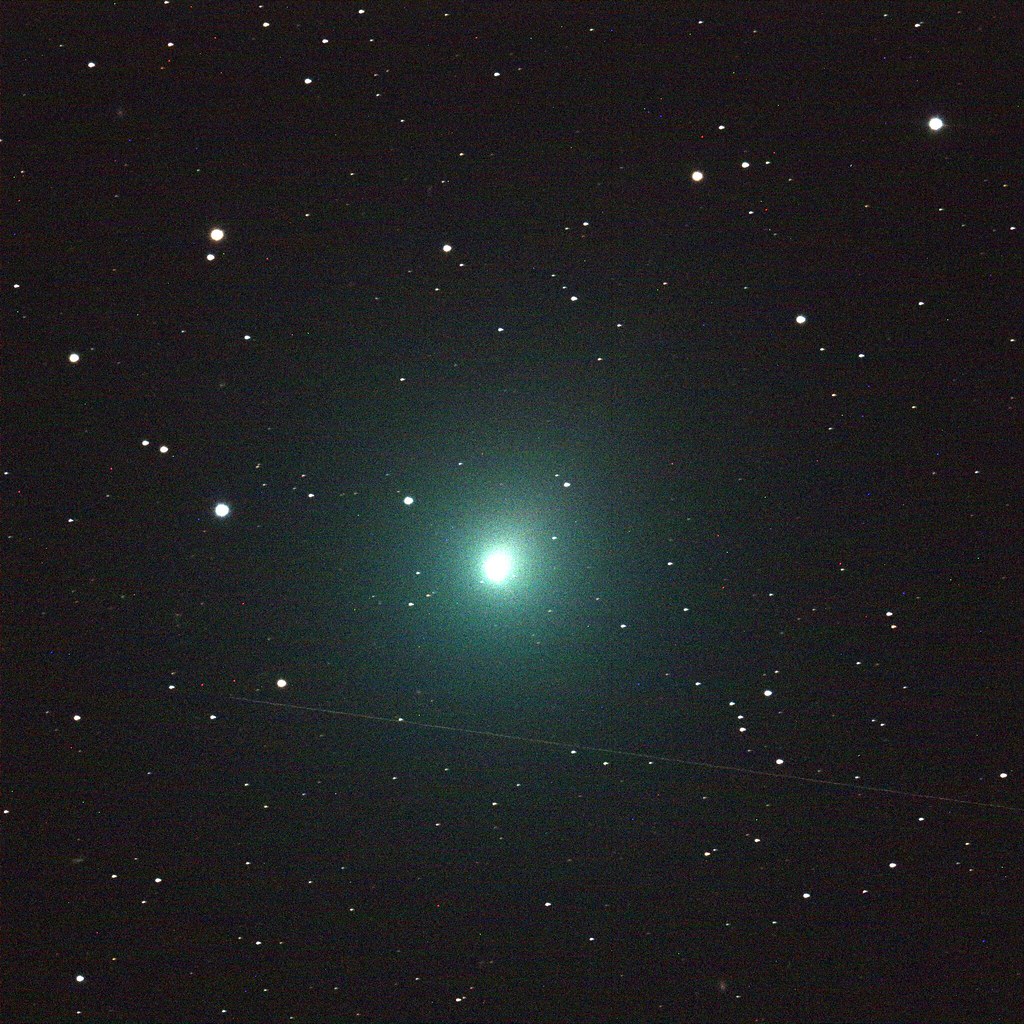
From that vantage point, our own Sun would be relegated to a modest +0.34 magnitude star in the constellation Cassiopeia—visible, but easily lost among the thousands of other stars. This reversal of perspective underscores how our perception of the cosmos is shaped by our location. The brilliant beacon that dominates our sky is just another point of light when seen from our nearest stellar neighbor.
Astronomers on such a planet would have a privileged view of a binary system's dynamics. They could observe stellar activity, orbital mechanics, and the interaction of two stellar winds in real time. Such a setting would also provide a natural laboratory for understanding the habitable zones of binary systems, a topic of growing interest as we discover more exoplanets in multiple-star configurations.
Interstellar Perspectives on the Heliosphere
As Voyager 1 continues its journey outward, the opportunity to look back and study the heliosphere from the outside becomes increasingly compelling. The heliosphere—a vast bubble carved out by the solar wind—shields our solar system from the majority of galactic cosmic rays. Yet its shape, size, and dynamics remain poorly constrained because we have only sampled it from within. A dedicated interstellar probe, as envisioned by Mike Gruntman and others, would carry instruments capable of imaging the heliosphere in energetic neutral atoms and Lyman-alpha emission, providing a global view that ground-based and inner-solar-system observations cannot achieve.
Such a "look back" would reveal how the solar wind interacts with the interstellar medium, where the bow shock and heliopause are located, and how the heliosphere responds to changes in the solar cycle. It would also help us interpret observations of other s around nearby stars, linking our local environment to processes occurring throughout the galaxy. The Voyagers have given us tantalizing hints of what lies beyond, but their instruments were not designed for this specific task, and their power supplies are dwindling.
Future missions, perhaps propelled by solar sails or nuclear electric propulsion, could reach several hundred astronomical units within a few decades, far surpassing the Voyagers' pace. As detailed in Interstellar Expansion: Colonizing Ice Dwarfs, the outer solar system is rich with resources and potential staging points for such endeavors. A probe stationed far beyond the heliopause would rewrite textbooks on our place in the galaxy.
The Pale Blue Dot Revisited
The famous "Pale Blue Dot" image, captured by Voyager 1 in 1990, showed Earth as a tiny speck suspended in a sunbeam. It was a humbling reminder of our fragility and isolation. But what might a future image from a truly interstellar vantage point reveal? If a probe were to look back from, say, 1,000 AU—well beyond the heliopause—the Sun would still shine at magnitude -11.5, still the brightest object in the sky, but our planet would be utterly lost in its glare. To see Earth separately, we would need to block the Sun's light with a coronagraph or observe in infrared, where the planet's thermal emission could be detected.
Even more profound would be an image from a probe at 100,000 AU, where the Sun finally fades to a mere +0.3 magnitude, comparable to Alpha Centauri's apparent brightness from Earth. At that distance, our entire solar system would fit within a single pixel, reducing all of human history to an infinitesimal dot. Such images would provide a stark visual metaphor for the vastness of space and the isolation of life.
As with the original Pale Blue Dot, the impact would lie not in the scientific data but in the emotional resonance. Carl Sagan's words still echo: "Look again at that dot. That's here. That's home. That's us." Future images from deep space would force us to confront our cosmic insignificance once more, perhaps spurring a renewed appreciation for the only world we know.
Future Missions and the Interstellar Medium
The New Horizons spacecraft, now well past Pluto, is the latest in a line of probes venturing into the outer solar system. Its observations of the Kuiper Belt and the heliosphere's outer regions are paving the way for more ambitious interstellar missions. As discussed in With New Horizons Ready to Wake Up, Scientists Prepare for Pluto Encounter, the mission has already revolutionized our understanding of the Pluto system and is now exploring the distant Kuiper Belt object Arrokoth.
Plans for a dedicated interstellar probe have been proposed repeatedly, often under names like "Interstellar Probe" or "Innovative Interstellar Explorer." Such a mission would launch in the 2030s and reach 1,000 AU within 50 years, using a heavy-lift rocket and a Jupiter gravity assist. Its instrument suite would include a plasma wave antenna, a magnetometer, a dust detector, and a Lyman-alpha imager to map the heliosphere from outside.
The interstellar medium itself, though tenuous, is far from empty. It contains gas, dust, magnetic fields, and cosmic rays that tell a story of stellar evolution and galactic ecology. By venturing into this realm, we not only learn about our own solar system but also about the processes that shape our galaxy. The Voyagers have already shown that the boundary is complex and dynamic; a purpose-built probe would finally unravel its mysteries.
Conclusion: The Long View
Our journey into deep space is not just a technological endeavor but a philosophical one. Each step outward—from the first satellite to the Voyagers to future interstellar probes—forces us to reconsider our place in the universe. The act of looking back, as we have seen, is as illuminating as looking forward. The changing brightness of the Sun, the evolving view of our home world, and the gradual revelation of the heliosphere all serve as waypoints on this voyage of understanding.
As we contemplate the vast distances involved—14,000 years to reach the Sun's gravitational edge, 100,000 AU to where the Sun becomes just another star—we are reminded that interstellar travel is a multi-generational project. Yet the seeds are being planted today, in the form of advanced propulsion concepts, long-lived electronics, and a relentless curiosity about what lies beyond. The 100 Year Starship initiative and similar programs are exploring the human and technical challenges of such journeys.
Ultimately, the images and data we gather from deep space will not only expand our scientific knowledge but also enrich our collective imagination. The pale blue dot taught us humility; the view from beyond the heliosphere will teach us perspective. As we continue to push outward, we carry with us the hopes and questions of a species that has always looked to the stars and wondered what lies beyond the next horizon.