Resources Between the Stars
Yesterday we looked at the possibility of colonizing worlds much different from the Earth. Seen in one light, pushing out into the Kuiper Belt and building settlements there is part of a slow migration to the stars that may occur without necessarily being driven by that purpose. Seen in another, experimenting with human settlements in extreme environments is a way of exploiting the resources of nearby space, pushing the human presence out into the Oort Cloud. Either way, we can find places that, while not ‘habitable’ in the classic sense of liquid water at the surface, are nonetheless colonizable.
In his Tale of Two Worlds, novelist Karl Schroeder works on a definition of a colonizable world. It has to have an accessible surface, for one thing, meaning one we can work with — obviously a surface gravity of 4 g’s is going to be a problem. Much smaller worlds like Pluto, as we saw yesterday in Ken Roy’s work on possible colonies there, pose less of a challenge, as we can imagine strategies to produce one g for the inhabitants. Schroeder also notes there has to be a manageable flow of energy at the surface in which we can move heat around. That seems reasonable enough, although advanced technologies will have a wider zone than we have.
But I found Schroeder’s third point interesting. Here he’s drawing on a 1978 paper in Science called “The Age of Substitutibility,” by Harold Goeller and Alvin Weinberg (Oak Ridge National Laboratory), in which the authors describe the artificial mineral they call ‘demandite.’ It comes, as Schroeder notes, in two forms:
A molecule of industrial demandite would contain all the elements necessary for industrial manufacturing and construction, in the proportions that you’d get if you took, say, an average city and ground it up into a fine pulp. There’re about 20 elements in industrial demandite including carbon, iron, sodium, chlorine etc. Biological demandite, on the other hand, is made up almost entirely of just six elements: hydrogen, oxygen, carbon, nitrogen, phosphorus and sulfur. (If you ground up an entire ecosystem and looked at the proportions of these elements making it up, you could in fact find an existing molecule that has exactly the same proportions. It’s called cellulose.)
The point is that the right elements have to be accessible on the object you’re trying to live on to make it colonizable. Now if you can find a place that meets the three criteria, surprising things can happen. Centauri B b looks to be a nightmarish place, probably tidally locked and roiling with lava on its day side, and almost certainly without a breathable atmosphere. But from the standpoint of colonizability, we can’t rule out the night side, and the fact that this (still unconfirmed) world has a surface gravity about the same as Earth’s also works in its favor.
Ken Roy’s talk at Huntsville looked at places that seemed equally inhospitable, but which may have the necessary resources to provide an advanced human civilization with what it needs to create settlements there, whether as part of a deliberate interstellar migration or simple exploration. Yesterday I focused on Pluto, but of course the Kuiper Belt is stuffed with objects, hundreds of which may be Pluto-sized, while cometary bodies in the Oort Cloud are thought to number in the trillions, based on the study of long-period comets and their frequency.
Like Schroeder, Roy is interested in brown dwarf possibilities as well. The odds on our finding a brown dwarf closer than Proxima Centauri are dwindling, though I don’t think we can rule out a possible ultra-cool Y dwarf in this space (please correct me with any updated information). In any event, the WISE mission (Wide-field Infared Survey Explorer) has shown us that brown dwarfs are less common than we thought. WISE has discovered 200 brown dwarfs (including 13 Y dwarfs), 33 of which are within 26 light years of the Sun. Given that there are 211 stars in the same volume of space, we’ve found that there are about six stars for every brown dwarf.
If they’re not as abundant as we had thought, brown dwarfs may still become useful staging areas for far-future interstellar expeditions, for we know that some have accretion disks that indicate the possibility of planet formation. I’ve written before about brown dwarf habitable zones (see Brown Dwarfs and Habitability), but Roy’s point is that whether or not we find a world that’s habitable in the classic sense, we can still assume we’ll find the same kind of small, icy planets we see in our own Kuiper Belt, and the same technologies could exploit them.
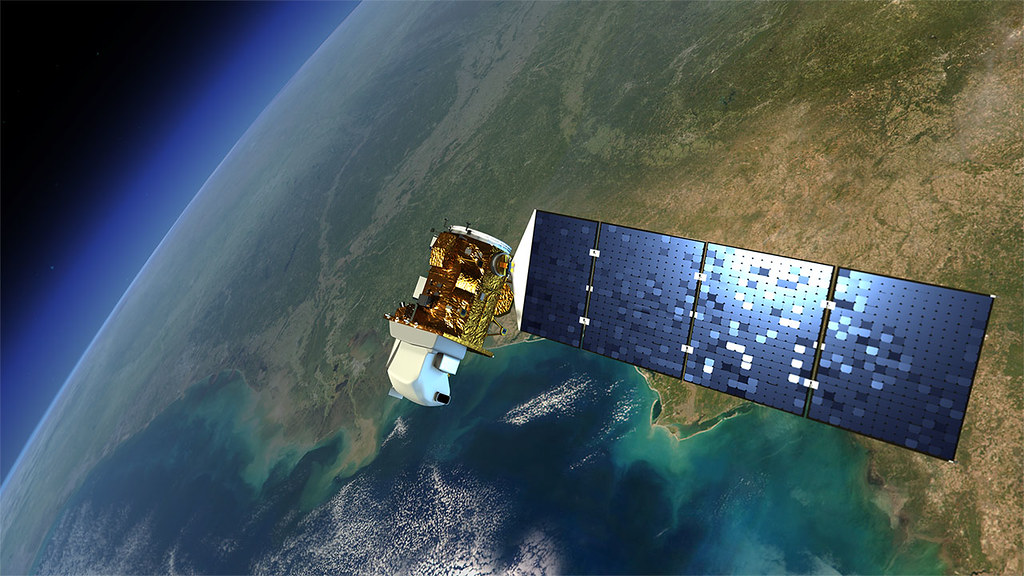
Roy is one of those intrigued with the idea of ‘rogue’ planets that move through the interstellar deep far from any star. We know little about these worlds, but it’s assumed that great numbers of them are out there, doubtless the result of gravitational interactions in young solar systems that caused them to be ejected. Dorian Abbot and Eric Switzer (University of Chicago) call these ‘steppenwolf’ planets because they ‘exist like a lone wolf wandering over the galactic steppe.’
Image: A ‘steppenwolf’ planet moving between the stars. Credit: NASA/JPL-Caltech.
Louis Strigari (Stanford University) has estimated that as many as 105 objects larger than Pluto exist for every main sequence star. If that’s anywhere like the case, then rogue planets ranging between the size of Ceres and Jupiter should be out there in abundance, and we can hope to put some constraints on their numbers through future gravitational microlensing surveys and even exoplanet transit studies, which may catch a rogue planet’s transit. Some studies show that radiogenic heating from the planetary core could keep an ocean under crustal ice liquid for billions of years even out here, where there is no star to provide warmth.
Deep space is not without resources, as we’re learning every day. Roy told the audience in Huntsville that cometary objects from the Kuiper Belt to the Oort Cloud should offer CO2, ammonia, methane, oxygen, carbon and nitrogen, while we can exploit asteroids for silicates and metals. We can only imagine what resources might be available in unattached worlds moving between the stars. This is all work for a civilization that has built a thriving deep space infrastructure, but then, thinking about the future is what we do here.
Rogue Planets as Stepping Stones
The notion of rogue planets—worlds wandering the galaxy untethered to any star—has evolved from a curiosity to a potentially critical resource for interstellar expansion. Gravitational interactions in young solar systems can eject planets of all sizes, from super-Earths to icy bodies smaller than Pluto. Estimates based on microlensing surveys suggest there may be more rogue planets than stars in the , with some studies proposing billions of Jupiter-mass wanderers and even more smaller ones. These worlds, if they retain internal heat from formation or radioactive decay, could host subsurface oceans or at least accessible ices and minerals, making them valuable waypoints for future travelers.
From a colonizability standpoint, rogue planets offer accessible surfaces, though gravity varies widely. A rogue super-Earth with a few Earth masses might provide comfortable gravity, while smaller bodies could be spun up or hollowed out. The absence of stellar energy is a drawback, but fusion or advanced fission could supply power, and the cold environment actually simplifies heat management for some industrial processes. As Ken Roy and others have noted, the same technologies we are developing for Kuiper Belt objects and Oort Cloud comets—such as autonomous mining and closed-loop habitats—could be adapted to rogue planets. For a deeper look at colony concepts on ice dwarfs, see our article Interstellar Expansion: Colonizing Ice Dwarfs.
Rogue planets might also serve as natural stepping stones between stars, reducing the psychological and logistical challenges of interstellar journeys. A string of such worlds could act as bases, allowing expeditions to proceed in stages rather than one massive leap. We have no direct evidence of any rogue planets near the Sun, but the upcoming New Exoplanet-Hunting Mission To Launch In 2017 (TESS) and future microlensing surveys may uncover nearby candidates. Even if none are found within a few light-years, the sheer number expected suggests they will be encountered eventually.
Mining the Interstellar Medium
Beyond discrete objects, the space between stars is not empty—it contains gas and dust at extremely low densities, typically one atom per cubic centimeter in the local bubble, but higher in molecular clouds. This interstellar medium is composed primarily of hydrogen and helium, with traces of heavier elements like carbon, oxygen, and iron. Collecting this material could provide fuel for fusion reactors, reaction mass for propulsion, and raw elements for construction and life support. The concept of a Bussard ramjet, first proposed in 1960, envisions a starship using a vast magnetic field to scoop up interstellar hydrogen for fusion, though the drag and energy requirements remain formidable challenges.
For slower, generation-long voyages, even the thin interstellar medium could be harvested using large electromagnetic collectors. The key is to balance the energy cost of collection against the benefits. A ship moving at a significant fraction of light speed would encounter more material but also face greater drag; a slower ship would collect less but could use the material to sustain a closed ecosystem. In any case, the interstellar medium is a ubiquitous resource that, unlike planets, is found everywhere along the journey, potentially reducing the need to carry all supplies from the start.
Practical engineering for such collectors is still speculative, but research into magnetic sails and plasma magnetospheres offers glimpses of possible approaches. The material collected could be separated into elemental components and used to manufacture spare parts or even expand the habitat. This idea ties into broader concepts of self-replicating machines and in-situ resource utilization, which will be essential for any long-duration interstellar presence.
Brown Dwarfs as Resource Hubs
Though WISE data indicate brown dwarfs are less common than previously thought, with roughly one brown dwarf for every six stars in the solar neighborhood, they remain significant potential resource nodes. These substellar objects, with masses between 13 and 80 Jupiter masses, generate some heat from gravitational contraction and deuterium fusion early in their lives, but eventually cool. Nevertheless, they may host systems of planets and debris disks, providing solid surfaces and minerals. A brown dwarf’s gravitational well is much shallower than a star’s, making access easier and requiring less energy to land and take off from its associated bodies.
The dim, cool nature of brown dwarfs also means less harmful radiation, simplifying shielding for habitats on nearby moons or artificial structures. Furthermore, a brown dwarf could serve as a gravitational anchor for a collection of habitats, allowing a dispersed civilization to thrive in its vicinity. While no brown dwarf has been confirmed within a few light-years, the possibility of a very cool Y dwarf lurking in the outer solar system cannot be entirely dismissed, and continued surveys like WISE and the upcoming New Exoplanet-Hunting Mission may settle the question.
Even without a nearby brown dwarf, the technologies developed to exploit Kuiper Belt objects and comets can be directly applied to brown dwarf systems. The same icy, organic-rich bodies that we hope to mine in our own system are likely abundant around brown dwarfs. Thus, brown dwarfs may become important waystations for missions traveling between stars, offering a rest stop with gravity, raw materials, and a stable location for building and refueling.
Technological and Economic Considerations
The utilization of interstellar resources hinges on advanced technologies that are only in their infancy today. Key among them is reliable, high-thrust propulsion capable of reaching even the nearest resource sites within reasonable timeframes. Fusion propulsion, laser-pushed light sails, and more exotic concepts like antimatter drives are all under study, but none are ready for practical use. Equally important is closed-loop life support, which must be perfected for long-duration missions where resupply is impossible. Finally, in-situ resource utilization (ISRU) is the linchpin: the ability to extract, process, and manufacture using local materials will determine whether a mission can be self-sustaining.
- Propulsion: Fusion rockets, beamed-energy sails, nuclear pulse propulsion.
- Life Support: Bioregenerative systems, chemical recycling, radiation shielding.
- ISRU: Mining robots, 3D printing with local regolith, volatile extraction from ices.
- Power: Compact fusion reactors, advanced photovoltaics for near-star operations, radioisotope thermoelectric generators for deep space.
Economically, the drivers for interstellar resource extraction are not immediate profit but long-term survival and expansion. The costs are astronomical, and no single nation or corporation is likely to fund such ventures alone. International collaboration and private-public partnerships, such as those advocated by the 100 Year Starship initiative, will be essential. The resources of interstellar space—water ice, metals, and organic compounds—are invaluable for sustaining a growing off-world population and eventually enabling the construction of true generation ships.
We already have experience in extracting resources from asteroids and comets within our solar system, and missions like New Horizons are providing crucial data on Kuiper Belt objects. These are the testing grounds for the technologies that will one day be used between the stars.
The Big Picture: Resources and the Future of Humanity
When we consider the vast resources available between the stars—rogue planets, interstellar gas, brown dwarf systems, and the countless icy bodies of the Oort Cloud and beyond—it becomes clear that the material basis for a spacefaring civilization is abundant. The challenge is not the availability of resources but the development of the technology and the will to reach them. Every step outward, from the Moon to Mars to the Kuiper Belt, is a rehearsal for the greater journey.
Some thinkers argue that our expansion into space is not merely an option but a necessity for long-term survival. By spreading beyond Earth, we hedge against existential risks and ensure that the flame of consciousness continues. As we look back at our home world from deep space, the perspective gained may also transform our understanding of ourselves and our responsibilities. Our article Looking Back from Deep Space explores this theme in more depth.
Ultimately, the resources between the stars are waiting. They do not demand that we use them; they simply exist, a silent invitation. Whether we accept that invitation depends on our imagination, our courage, and our commitment to the long future. The universe is not short on materials; it is short on minds that decide to reach for them.