Toyota’s hydrogen car gets a name and more US filling stations
Toyota’s $69,000 fuel cell vehicle (FCV) coming next year is called the Mirai and will have a network of hydrogen stations in the US Northeast to support it. The Japanese automaker proclaimed that “the future has arrived,” (Mirai means “future” in Japanese) which may make the thousands of people who’ve owned a Honda FCX Clarity FCV since 2005 gag.
http://www.engadget.com/2014/11/17/toyota-mirai-hydrogen-network-us-northeast/?ncid=rss_truncated
Related
U.S. WC-135 nuclear sniffer airplane has left the UK heading towards Norway and the Barents Sea
The technology behind Toyota's Mirai
Toyota’s Mirai is a fuel cell vehicle (FCV), which means it runs on electricity generated on board from hydrogen rather than storing it in a battery. The heart of the car is the fuel cell stack, where hydrogen gas from the high-pressure tanks reacts with oxygen from the air to produce electricity, with water vapor as the only tailpipe emission. That electricity powers a synchronous AC motor, which drives the front wheels. A small nickel-metal hydride battery stores excess energy and provides a boost during acceleration, much like the battery in a hybrid but on a smaller scale. The system is elegantly simple in concept, but engineering it to be reliable, compact, and affordable has taken Toyota more than two decades.
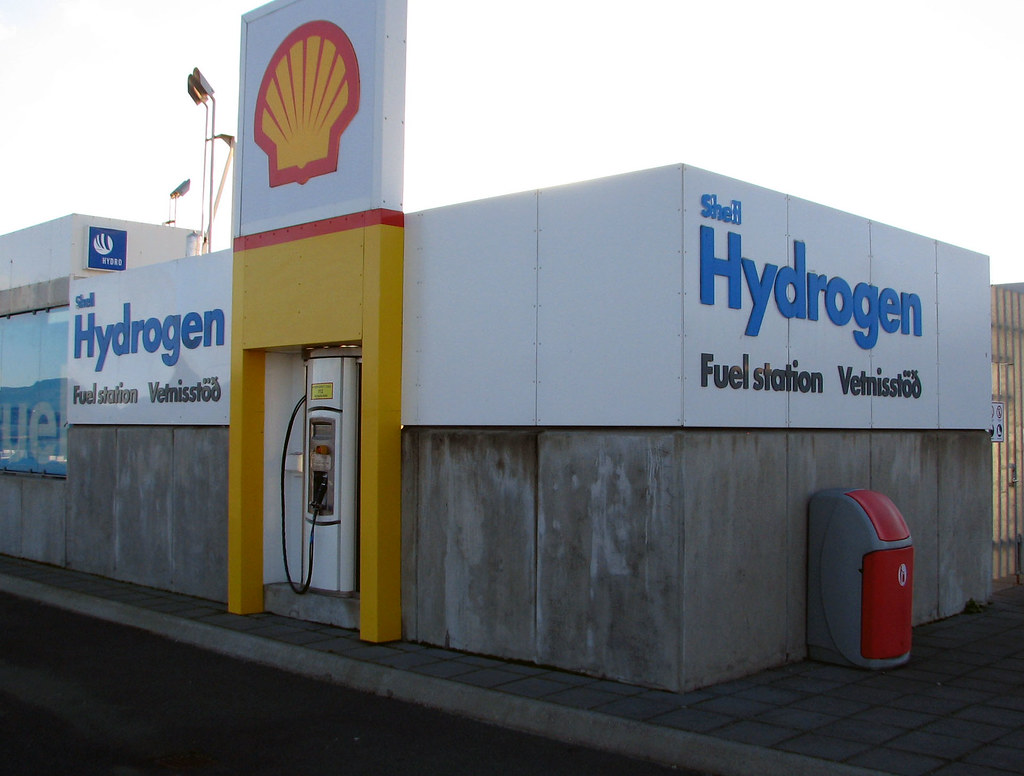
One of the key advantages of FCVs over battery electric vehicles (BEVs) is refueling time. While a BEV like the Tesla Model S needs anywhere from 30 minutes at a Supercharger to several hours on a home charger, the Mirai’s two carbon-fiber hydrogen tanks can be filled in about three to five minutes, giving a driving range of around 300 miles. That parity with conventional gasoline cars is crucial for mainstream adoption. However, the challenge lies in producing, transporting, and storing hydrogen in a way that is both economic and environmentally sound. Most hydrogen today is derived from natural gas through a process called steam methane reforming, which does release carbon dioxide. Toyota and its partners are investing in renewable hydrogen production methods, such as electrolysis powered by solar or wind, to close the carbon loop.
The Mirai also showcases some clever engineering tricks. For instance, the fuel cell stack operates at a relatively low temperature and uses a proprietary membrane that allows it to start in freezing conditions—a historical weakness of fuel cells. Moreover, the car can act as a mobile power source: with an optional external power supply device, it can provide up to 60 kWh of electricity, enough to power an average home for a week during an emergency. This feature has been particularly appealing in Japan, where natural disasters are common and the government has been promoting hydrogen as part of its energy strategy.
From concept to production: Mirai's journey
The Mirai did not appear out of thin air. Toyota began researching fuel cells in 1992, and by 2002 it had leased a limited number of FCHV (Fuel Cell Hybrid Vehicle) SUVs to government and corporate fleets. Over the following decade, the company refined the technology, reducing costs by nearly 95% and increasing durability. The crowdsourced name “Mirai” was announced just before the 2014 Los Angeles Auto Show, replacing the more mundane internal designation “FCV.” The name, which means “future” in Japanese, is a bold statement of intent from a company that has long been skeptical of battery electric vehicles.
Design-wise, the Mirai is unmistakably different from anything else on the road. Its bold, angular front fascia with large air intakes feeds oxygen to the fuel cell stack, while the swooping roofline improves aerodynamics. Inside, the cabin features a futuristic layout with a high-mounted digital instrument panel and a wide, floating center console. The materials are soft-touch and the seats are supportive, but the most distinctive element is the absence of a conventional gear shifter; instead, there is a small joystick-like selector. The car seats four, with the rear seats separated by a central tunnel that houses the hydrogen tanks and battery, which some critics have called awkward.
Performance is modest but adequate: the electric motor delivers about 151 horsepower and 247 pound-feet of torque, good for a 0-60 mph time of around 9 seconds. The ride is smooth and quiet, with only a faint whine from the air compressor and the occasional gurgle as water is purged from the stack. Toyota has not positioned the Mirai as a sports car, but rather as a comfortable, premium sedan for early adopters and fleet users. The $69,000 price tag is steep, but California buyers can take advantage of a $5,000 state rebate and a federal tax credit of $8,000, bringing the effective cost down to $56,000. Toyota is also offering a $499 per month lease with $3,649 due at signing, which includes free hydrogen fuel for up to three years—a significant incentive given the current high cost of hydrogen at the pump.
Hydrogen infrastructure: the make-or-break factor
For any fuel cell vehicle to succeed, a robust network of hydrogen refueling stations is essential. Toyota has recognized this and has been working with partners such as Air Liquide to build stations in key markets. Initially, the focus was on California, where the state government has allocated funds for a network of 100 stations by 2020. The announcement that Toyota will support a hydrogen station network in the US Northeast is a major expansion, bringing the total planned coverage to areas like New York, New Jersey, Massachusetts, Connecticut, and Rhode Island. This is crucial because early adopters outside California previously had no way to refuel.
Building a hydrogen station is not cheap—each one costs between $1 million and $2 million, compared to about $50,000 for a Level 3 DC fast charger for electric vehicles. The stations must comply with stringent safety codes, and hydrogen is difficult to store due to its low density and tendency to leak. Most stations today use liquid hydrogen delivered by truck, which requires cryogenic storage at -253°C, or compressed hydrogen gas stored at 700 bar (10,000 psi). Toyota and its partners are exploring on-site hydrogen production via electrolysis, which could reduce delivery costs and improve the carbon footprint if renewable electricity is used. But such systems are still in the demonstration phase.
The Northeast network is expected to start with about a dozen stations, strategically placed along major highways and in urban centers. Toyota has not disclosed the exact timeline for full build-out, but the goal is to have enough stations to make routine driving practical. This is a chicken-and-egg problem: without stations, nobody will buy fuel cell cars, and without cars on the road, station operators won’t invest. Toyota is trying to break the deadlock by subsidizing station construction and guaranteeing hydrogen demand through its lease program. Whether this will be enough to kickstart the market remains to be seen.
Is hydrogen the future or a dead end?
The debate over hydrogen fuel cell vehicles versus battery electric vehicles has become one of the most contentious in the automotive industry. Proponents of FCVs, including Toyota, Honda, and Hyundai, argue that hydrogen offers the best of both worlds: zero tailpipe emissions, long range, quick refueling, and the ability to scale up to larger vehicles like trucks and buses. They also point out that hydrogen can be produced from a variety of sources, including natural gas, biomass, and water, providing energy security. Critics, most notably Tesla CEO Elon Musk, have called fuel cells “fool cells,” citing the inefficiency of producing, compressing, and transporting hydrogen compared to simply charging a battery.
The efficiency argument is compelling: a battery electric vehicle converts about 80-90% of the electrical energy from the grid into motion, while a fuel cell vehicle might only achieve 25-35% efficiency when hydrogen is produced via electrolysis and then converted back to electricity. However, this comparison ignores the fact that hydrogen can be produced from excess renewable energy that would otherwise be curtailed, effectively storing energy for later use. In that sense, hydrogen and batteries could be complementary rather than competing. For example, excess solar power in California could be used to make hydrogen during the day, which could then be used to fuel cars at night.
Environmental concerns also play a role. While the Mirai emits only water vapor, the production of hydrogen from natural gas releases CO2. However, if carbon capture and storage are applied, the process can be made nearly carbon-neutral. Toyota has pledged to support renewable hydrogen, and in Japan, the government is investing heavily in a “hydrogen society,” with plans for fuel cell power plants and a hydrogen pipeline network. The true test will be whether the cost of hydrogen can come down from its current price of about $13-16 per kilogram (equivalent to $5-6 per gallon of gasoline) to a point where it is competitive with other fuels.
Market reception and competition
The Mirai is not alone in the fuel cell market. Hyundai has been selling the Tucson Fuel Cell (known as the ix35 Fuel Cell outside North America) since 2013, primarily through leases in Southern California. Honda, which was the first to market with the FCX Clarity in 2008, is preparing to launch a new fuel cell sedan based on the Clarity platform in 2016. Mercedes-Benz has also tested small numbers of its B-Class F-Cell, and other manufacturers like BMW and General Motors have announced partnerships to develop fuel cell technology. However, none have matched Toyota’s commitment to mass production and infrastructure investment.
Consumer interest in fuel cell vehicles is still low, according to surveys. The high price, limited refueling infrastructure, and unfamiliarity with hydrogen as a fuel are significant barriers. But Toyota is betting that early adopters—tech enthusiasts, environmentalists, and corporate fleets—will embrace the Mirai as a statement of the future. The company plans to produce about 700 units in 2015, ramping up to tens of thousands by the 2020s. That is a drop in the bucket compared to the millions of gasoline cars sold each year, but it is a start.
One wild card is the rapid improvement in battery technology. The BMW i3 and Tesla Model S have proven that electric cars can be desirable and practical for many drivers. If battery costs continue to fall and charging speeds increase, some argue that fuel cells will become redundant. Toyota, however, sees hydrogen as complementary, especially for larger vehicles and long-distance travel where batteries are less practical. The company envisions a future where both technologies coexist, serving different segments of the market.
What's next for Toyota and hydrogen
Toyota has made it clear that the Mirai is just the beginning. The company is exploring fuel cell applications beyond passenger cars, including buses, trucks, forklifts, and even stationary power generation. In Japan, Toyota has partnered with municipalities to deploy fuel cell buses for public transit, and it is working on a fuel cell delivery truck for the U.S. market. The modular nature of the fuel cell stack means it can be scaled up or down for different uses, potentially creating new revenue streams.
On the infrastructure side, Toyota is not only building stations but also developing technology to make hydrogen production more efficient and sustainable. For instance, the company has demonstrated a system that uses biogas from agricultural waste to produce hydrogen, and it is researching photocatalytic water splitting as a long-term goal. Toyota has also joined the Hydrogen Council, a global initiative of energy and automotive companies that aims to promote hydrogen as a key part of the energy transition.
For consumers, the most immediate development will be the expansion of the Mirai’s availability. While initially limited to California, the addition of the Northeast network means buyers in New York, New Jersey, and other states can finally consider the car. Toyota is also expected to introduce a second-generation Mirai with improved range and lower cost around 2020. Whether the hydrogen revolution will take hold depends on a complex interplay of technology, economics, and policy, but one thing is certain: Toyota is betting big on the future, and the Mirai is its opening salvo.
- Range: Approximately 300 miles on a full tank of hydrogen
- Refueling time: 3-5 minutes at 700 bar
- Power output: 151 hp / 247 lb-ft of torque
- Seating capacity: 4 passengers
- Warranty: 8 years / 100,000 miles on fuel cell components
- Incentives (California): $5,000 state rebate + $8,000 federal tax credit