Christopher Nolan's Interstellar is a cinematic marvel that defies easy categorization. With its breathtaking shot-on-film cinematography, emotionally resonant performances, and a plot that weaves through wormholes and black holes while juggling theoretical physics, it stands as a bold testament to Hollywood's complicated relationship with intelligent science fiction. This film is not just a space epic; it is a mirror reflecting the industry's enduring love/hate affair with 'smart' sci-fi—a genre that challenges audiences and studios alike.
The Allure of the Cosmos: Interstellar's Ambitious Vision
At its core, Interstellar is a story about survival, love, and the relentless human drive to explore. Nolan and his brother Jonathan co-wrote the screenplay, drawing inspiration from the work of theoretical physicist Kip Thorne, who served as an executive producer and scientific consultant. The film's depiction of a dying Earth, a desperate mission through a wormhole near Saturn, and the mind-bending effects of time dilation near a supermassive black hole (Gargantua) are grounded in real scientific concepts. This commitment to plausibility elevates the film beyond typical space opera, inviting viewers to ponder relativity, quantum gravity, and the nature of time itself.
The visual realization of these ideas is no less ambitious. Cinematographer Hoyte van Hoytema shot on 35mm and IMAX film, capturing the stark beauty of interstellar travel and the eerie landscapes of alien worlds. The result is a tactile, immersive experience that feels both epic and intimate. Hans Zimmer's score, driven by a church organ, adds a spiritual dimension to the cosmic journey. Yet for all its technical prowess, the film never loses sight of its emotional center: the bond between a father (Cooper) and his daughter (Murph), which transcends space and time.
The Science Behind the Fiction: Consulting with Physicists
Hollywood has a long history of consulting with scientists, but Interstellar took this to an unprecedented level. Kip Thorne, a leading expert on black holes and gravitational waves, insisted that the film's science be as accurate as possible within the bounds of storytelling. This led to groundbreaking visual effects—most notably, the rendering of Gargantua, the black hole, using equations from general relativity. The resulting image, with its glowing accretion disk and gravitational lensing, was so accurate that it led to a scientific paper. Thorne's involvement ensured that the film's speculative elements (such as the fifth-dimensional 'tesseract') were at least rooted in theoretical possibilities.
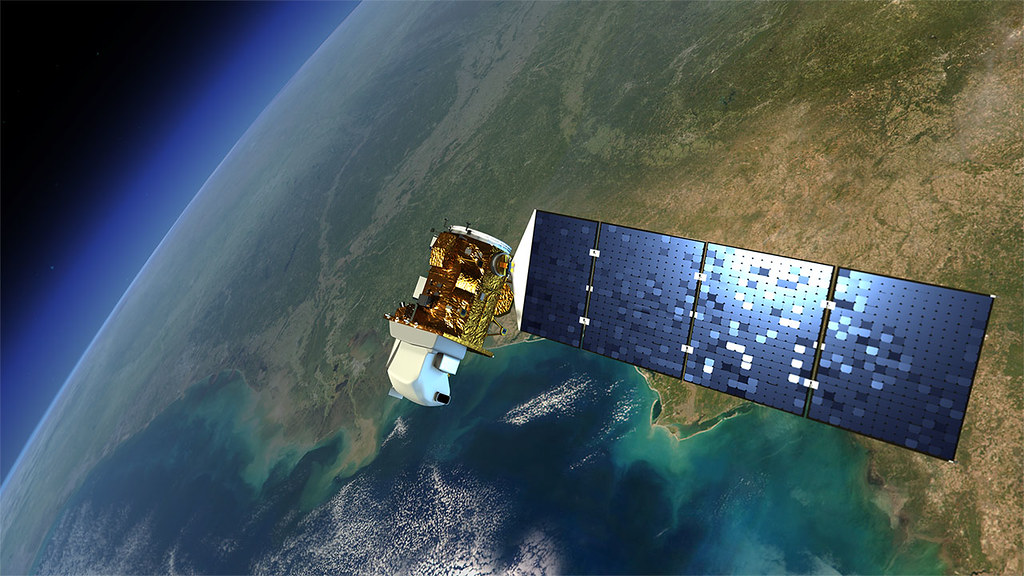
This partnership between scientists and filmmakers is not without tension. Science demands rigor and often resists narrative convenience, while movies require drama and resolution. Interstellar navigates this friction by bending some rules (such as the survival of a spacecraft inside a black hole) while adhering to others (like time dilation). The result is a film that rewards scientifically literate viewers without alienating general audiences—a delicate balancing act that epitomizes the challenge of smart sci-fi.
Hollywood's Historical Ambivalence Toward Smart Sci-Fi
The film industry's relationship with intelligent science fiction has always been fraught. For every 2001: A Space or Blade Runner, there are dozens of space shoot-'em-ups and alien invasion flicks that prioritize spectacle over substance. The financial risk of cerebral storytelling is real: films that demand patience and intellectual engagement often struggle at the box office, while action-packed blockbusters dominate. Stanley Kubrick's 2001, now revered as a masterpiece, was initially met with mixed reviews and confusion. Ridley Scott's Blade Runner flopped on release, only to become a cult classic. These cautionary tales loom large in studio boardrooms.
"Smart science fiction asks the audience to think, and that's a risk in a market that often rewards not thinking."
Yet the success of recent films like Inception, Gravity, and The Martian suggests that audiences are hungry for more than explosions. These movies prove that it is possible to combine intellectual rigor with commercial appeal. Interstellar continues that trend, grossing over $700 million worldwide. Still, the industry remains wary; for every Arrival, there is a Passengers that underperforms. The love/hate dynamic persists because the stakes are so high.
The Blockbuster Formula vs. Cerebral Storytelling
Modern Hollywood blockbusters are often engineered for global appeal, with simple plots, relatable characters, and relentless action. Smart sci-fi, by contrast, frequently subverts these conventions. It may feature morally ambiguous protagonists, non-linear narratives, and endings that provoke debate rather than closure. Interstellar attempts to straddle both worlds: it has the scale and set pieces of a blockbuster, but its central conflict is resolved through a quantum physics-inspired deus ex machina that many viewers found baffling. The film's climax, set inside a tesseract constructed by future humans, is either brilliant or ridiculous depending on one's tolerance for speculative theory.

This tension is not new. Consider Contact (1997), based on Carl Sagan's novel, which balanced hard science with spiritual themes. Or Primer (2004), a low-budget time-travel puzzle that demands multiple viewings. Such films occupy a niche, while Interstellar aims for the mainstream. Its mixed reception—acclaimed by many critics, criticized by others for its exposition-heavy dialogue and logical leaps—reflects the difficulty of pleasing both camps. Hollywood continues to experiment, but the pressure to deliver a return on investment often leads to compromises that dilute the intelligence of the source material.
Audiences' Appetite for Intellectual Challenge
Despite Hollywood's hesitance, there is a growing audience segment that craves intellectually stimulating science fiction. The success of streaming platforms has allowed more niche content to find its audience, from Black Mirror to The Expanse. These shows and films treat viewers as intelligent adults, trusting them to follow complex plots and engage with philosophical questions. Interstellar taps into this desire, offering a cinematic experience that rewards close attention and repeated viewing.
Moreover, the current cultural moment—marked by rapid technological change, climate anxiety, and existential questions about humanity's future—makes thoughtful sci-fi more relevant than ever. Films like Interstellar don't just entertain; they provoke discussions about our place in the universe, the ethics of exploration, and the power of love as a fundamental force. That resonance is something pure escapism cannot provide. The challenge for Hollywood is to market these films without oversimplifying their appeal, a task that remains as tricky as navigating a wormhole.
The Future of Thought-Provoking Sci-Fi in Cinema
Looking ahead, the outlook for smart sci-fi is cautiously optimistic. The critical and commercial success of Dune (2021), another ambitious adaptation of a dense novel, demonstrates that epic-scale intelligent science fiction can thrive. Upcoming projects from visionary directors like Denis Villeneuve and Christopher Nolan himself continue to push boundaries. Meanwhile, advances in visual effects allow filmmakers to realize ever more intricate concepts, from accurate black holes to simulated quantum phenomena.
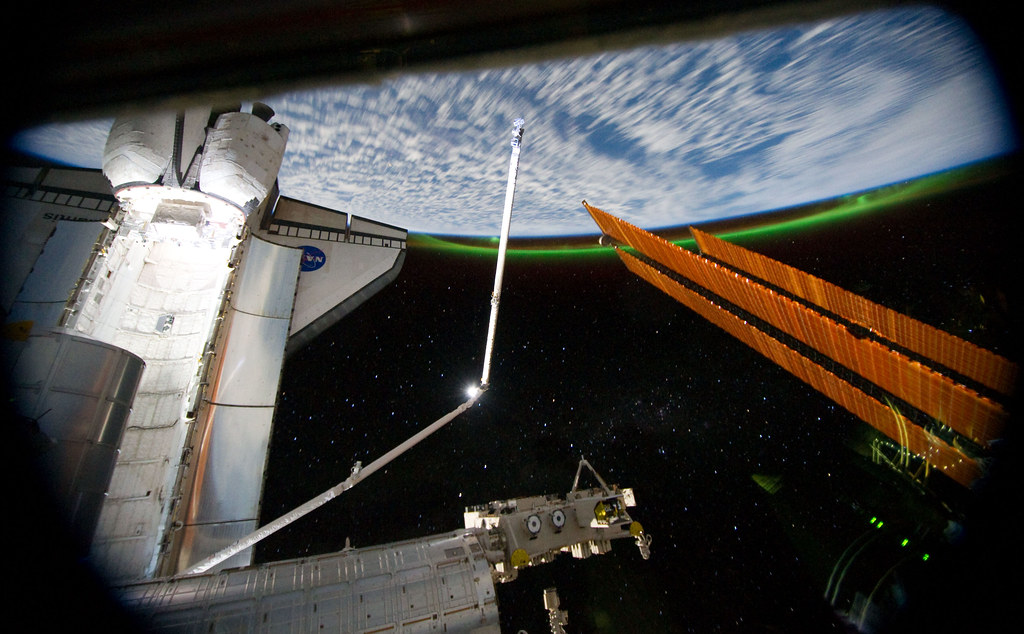
However, the fundamental tension remains: big-budget films must appeal to the widest possible audience, and that often means simplifying complex ideas. The solution may lie in a diversity of approaches. Smaller, independent films can take bigger risks, while blockbusters can incorporate smart elements without sacrificing accessibility. Interstellar is a case study in this balancing act—a film that thrilled many and confounded some, but ultimately succeeded in bringing hard science to the multiplex. As long as there are storytellers willing to wrestle with big ideas and audiences willing to engage with them, the love/hate affair will continue—and that is a good thing for cinema.
Conclusion: Finding Balance
Hollywood's relationship with smart sci-fi is a delicate dance between art and commerce. Interstellar embodies this friction, showcasing the genre's potential for both wonder and confusion. It is a film that dares to ask profound questions while still delivering the spectacle audiences expect. In doing so, it reminds us that the best science fiction doesn't just predict the future; it illuminates the present. The ongoing struggle to bring intelligent stories to the screen is, in itself, a story worth telling—a tale of ambition, compromise, and the enduring human hunger for meaning among the stars.