Archive for January, 2013
Owl Mystery Unravelled: Scientists Explain How Bird Can Rotate Its Head Without Cutting Off Blood Supply to Brain
Medical illustrators and neurological imaging experts at Johns Hopkins have figured out how night-hunting owls can almost fully rotate their heads — by as much as 270 degrees in either direction — without damaging the delicate blood vessels in their necks and heads, and without cutting off blood supply to their brains. Continue reading →
Amazon.com Down For Many Users, With Homepage Showing ‘Service Unavailable’ Message (Back Up Now)
Updated. Amazon.com’s main website appeared to be down for many visitors for a 45-minute-long period today, with the site returning a mostly blank page that reads “Http/1.1 Service Unavailable.” Continue reading →
Researcher Uncovers Potential Cause, Biomarker for Autism and Proposes Study to Investigate Theory
A New York-based physician-researcher from Touro College of Osteopathic Medicine, best known for his research into fertility and twinning, has uncovered a potential connection between autism and a specific growth protein that could eventually be used as a way to predict an infant’s propensity to later develop the disease. The protein, called insulin-like growth factor (IGF), is especially involved in the normal growth and development of babies’ brain cells. Based on findings of prior published studies, Touro researcher Gary Steinman, MD, PhD, proposes that depressed levels of this protein in the blood of newborns could potentially serve as a biomarker for the later development of autism. However, this connection, described below in greater detail, has never been directly studied. Steinman presents his exciting theory in the journal Medical Hypotheses. Continue reading →
Experts Ready to Tackle Super Bowl Injury Questions
Super Bowl 2013 is this Sunday, February 3, and UC San Diego Health System has some of its all-star experts ready to answer questions about concussions and injury prevention, as well as current treatment options and typical recovery times if injuries occur.
Christopher Wahl, MD – Sports Medicine – specialties include knee dislocation, rotator cuff tears, shoulder instability/dislocation and sports-related fractures and joint injuries.
Matthew Meunier, MD – Sports Medicine – specialties include hand and upper extremities.
Alexander Khalessi, MD – Neurosurgery – specialties include head injury, concussion and stroke.
How to use a million-core supercomputer—without it blowing up in your face
Throwing more cores at science: high risk for high reward.
Jet noise simulation. An engine nozzle is on the left in gray; exhaust temperatures are in red and orange; sound is represented in blue and cyan.

At the Lawrence Livermore National Laboratory in California, a supercomputer named “Sequoia” puts nearly every other computer on the planet to shame. With 1.6 million processor cores (16 per CPU) across 96 racks, Sequoia can perform 16 thousand trillion calculations per second, or 16.32 petaflops. Continue reading →
Sea Launch Zenit 3SL rocket launching with the Intelsat 27 communications satellite
Sea Launch’s mobile rocket platfrom has arrived in the equatorial Pacific Ocean for the Friday’s launch of the Intelsat 27 communications satellite, a spacecraft to cover the Americas and Europe for media and government customers. Liftoff is set for 0656 GMT (1:56 a.m. EST).
Quantum strategies fail to improve capacity of quantum optical communication channels
This Is What the First Lunar Base Could Really Look Like
We have seen many concepts, but this is the most realistic plan yet for humanity’s first Moon Base. It will be more efficient and cheaper to build than any other alternative, as it uses 3D printing to quickly transform raw lunar soil into habitable domes. Continue reading →
Data for dummies: 6 data-analysis tools anyone can use
SUMMARY: Not everyone is drowning in big data or has the know-how to deal with it if they were. Here are six free web services that help mere mortals analyze and visualize their own data.

If you care only about the cutting edge of machine learning and how to manage petabytes of big data, you might want to quit reading now and just come to our Structure:Data conference in March. But if you’re a normal person dealing with mere normal data, you’ll probably want to stick around. Although your data might not be that big or complex, that doesn’t mean it isn’t worth looking at in a new light. Continue reading →
CES 2013: A Glimpse into the Future of Technology
The 2013 Consumer Electronics Show, held in Las Vegas from January 8 to 11, offered a preview of the gadgets and innovations that would shape the year ahead. From ultra-high-definition televisions to flexible displays and smart home devices, the event highlighted the industry's push toward more connected and immersive experiences. Major trends included the proliferation of 4K resolution, the integration of voice control, and the emergence of wearable technology as a mainstream category. Continue reading →
Among the standout announcements were a wave of new smartphones featuring larger screens and faster processors, as well as a renewed focus on automotive technology with self-driving car concepts. One of the most talked-about reveals was a prototype for a bendable OLED television that could transform from flat to curved, hinting at a future where displays adapt to user preferences. While many of these products remained concept-stage, CES 2013 set the tone for a year of rapid technological evolution. Continue reading →
New Horizons: NASA's Mission to Pluto Reaches the Midpoint
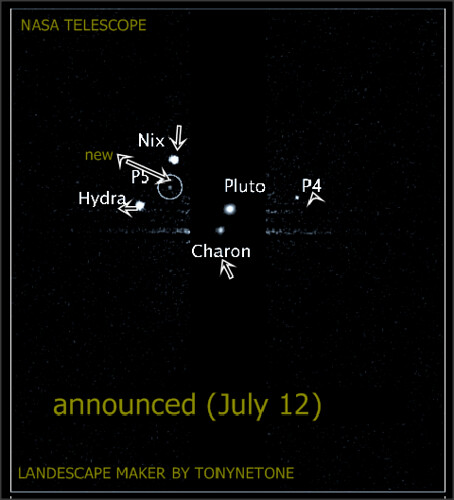
In January 2013, NASA's New Horizons spacecraft crossed the halfway point in its journey to Pluto, having traveled more than 2.5 billion miles since its launch in 2006. The probe, which would eventually perform the first flyby of the dwarf planet in July 2015, was then in a quiet cruise phase, with its instruments being periodically tested and calibrated. Scientists used this time to refine the mission's observation plans and study distant Kuiper Belt objects as potential secondary targets. Continue reading →
The milestone underscored the challenges of deep-space exploration, where missions span decades and require precise navigation. New Horizons' progress also generated anticipation for the unprecedented images and data it would return from the Pluto system, which was still largely a mystery at the time. The spacecraft's journey highlighted the importance of long-term planning and the patience required for groundbreaking discoveries in the outer solar system. Continue reading →
Breakthrough in Battery Technology: Solid-State Batteries Promise Longer Life
Researchers at a leading materials science institute announced a significant advance in solid-state battery technology, which could eventually replace the lithium-ion batteries powering today's electronics and electric vehicles. The new design uses a solid electrolyte instead of the flammable liquid found in conventional batteries, offering higher energy density, faster charging, and improved safety. In tests, the prototype maintained 90% of its capacity after 1,000 charge cycles, far surpassing existing solutions. Continue reading →
The development addresses one of the biggest bottlenecks in consumer electronics and renewable energy storage: battery longevity and safety. While commercialization is still years away, the breakthrough demonstrates a viable path toward batteries that could double the range of electric cars or allow smartphones to last a week on a single charge. Industry analysts note that scaling production and reducing costs remain key hurdles, but the potential impact is enormous. Continue reading →
The Rise of 3D Printing: From Prototypes to Mainstream Manufacturing
January 2013 saw a surge in interest around 3D printing, as the technology moved beyond niche hobbyist circles into broader industrial and consumer applications. Several startups unveiled affordable desktop printers capable of producing functional plastic parts, while established manufacturers demonstrated metal printing systems for aerospace and medical implants. The month also marked the announcement of the first 3D-printed gun, igniting a heated debate about regulation and digital fabrication. Continue reading →
Proponents argue that additive manufacturing reduces waste, enables on-demand production, and democratizes design. A growing ecosystem of online repositories for 3D models, such as Thingiverse, allowed users to share and download designs for everything from household items to prosthetic limbs. As the technology matured, experts predicted it would disrupt traditional supply chains and give rise to localized micro-factories. Continue reading →
For more on how 3D printing is shaping the future, see our earlier coverage in December 2012 and upcoming updates in February 2013.